A small or mid-sized business
The same few people answer the inbox, chase leads, book time, and build the weekly report. An agent team takes the repetitive passes so the people stay on judgment and relationships.

Custom AI agent systems
We build AI agent teams that move work from intake to follow-up, scheduling and reporting. Your people approve the decisions that matter.
For small businesses, mid-sized firms and departments across industries.
New client inquiries, 24/7+1 (954) 738-2510“Can you help us improve our follow-up?”
Explore each step
The intake agent organizes the inquiry, the customer’s details and what they need help with.
Connected context. Clear roles. Human approval.
Interactive demonstration
Open the original inquiry, inspect the drafted reply and see why scheduling stays on hold.
Open the approval workspace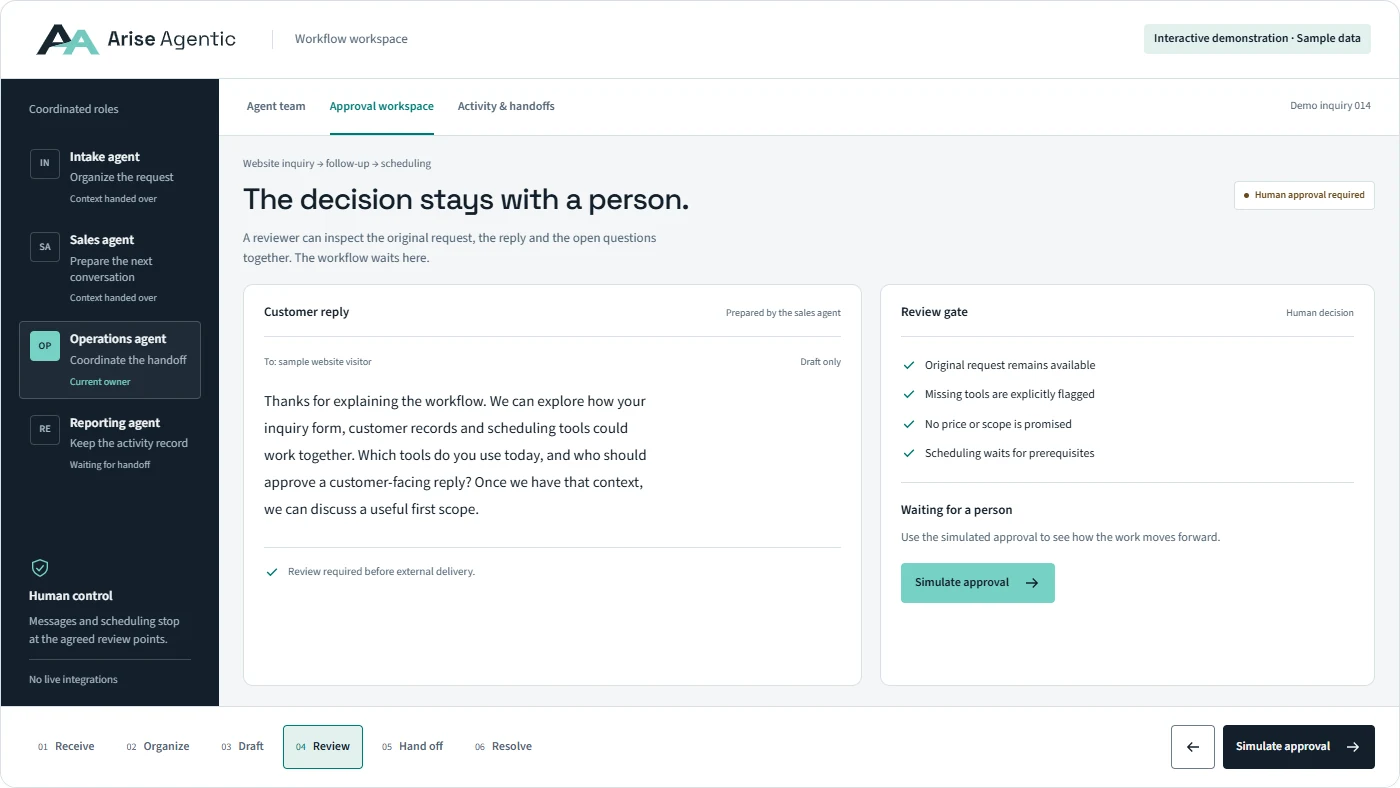
A sample website inquiry arrives. Intake organizes the request and flags missing tool information. Sales prepares a reply using the same context. A person reviews the draft and simulates approval. Operations prepares the handoff. Reporting records it, and scheduling stays on hold until a person confirms the tools and permissions.
Each role has a defined job, the information it needs, and a clear handoff. Scheduling, follow-ups and back-office tasks sit inside that shared workflow.
Keeps the handoffs moving and notices when a step is stuck.
Works new leads, drafts follow-ups, and lines up the next conversation.
Triages the inbox, answers routine questions, and flags what needs a person.
Prepares the report and lines up routine back-office tasks.
We run our own operations on agent systems like these. We build yours around the work your team needs to get done, starting with one workflow.
Email, customer records, calendars, documents, team messages and accounting can become parts of one coordinated operation. We confirm the connections and permissions during discovery.
Start with one operation. These are the delivery steps within a scoped project: agree what it should do, test it with your team, then hand it over.
We map how the operation runs today: the tools, the volumes, and the handoffs that take the most time.
Each agent gets a job, a boundary, and a list of decisions that wait for a person.
We build the agents and connect them to the tools you already use, so those systems pass work to each other.
A small slice of the work goes live first. People still approve the decisions that matter.
Your build includes a full handover. Run it with your team, or choose the monthly care plan: one improvement a month, checked on your dashboard.
Every build includes handover. After launch, run it with your team or choose the optional monthly care plan. See services and starting prices; a signed quote sets the exact fee.
The same few people answer the inbox, chase leads, book time, and build the weekly report. An agent team takes the repetitive passes so the people stay on judgment and relationships.
One operations, sales, or finance group wants a single workflow run by agents, inside that department and the tools it already uses.
For repetitive work, the aim is fewer manual handoffs and more of the routine follow-through handled in the workflow. We agree what a useful result looks like with your team.
The purpose is to free your team from repetitive work and help you do more without adding headcount.
Questions about your workflow? hello@ariseagentic.com.
Agents get only the access the job needs. Connections are tested in a separate staging copy before they touch live work. Secrets stay out of the project files, and the system keeps a log of what ran and what a person approved. We do not claim a certification.
Each agent has a written role. Routine steps can run. Anything that commits the company, sends a sensitive message, moves money, or is unclear waits for a named person. You can widen or tighten that line in the design.
We start with the tools you already use: email, a CRM, a calendar, spreadsheets and documents, team chat, and accounting. We confirm which connections are feasible and what access they need during discovery.
We start with one operation. We agree the roles, the tools to connect, and the decisions a person still approves. We run our own operations on agent systems like these.
Tell us what arrives, who handles it today, and where the handoffs get stuck.